
What is generative engine optimization and why it matters for SaaS brands

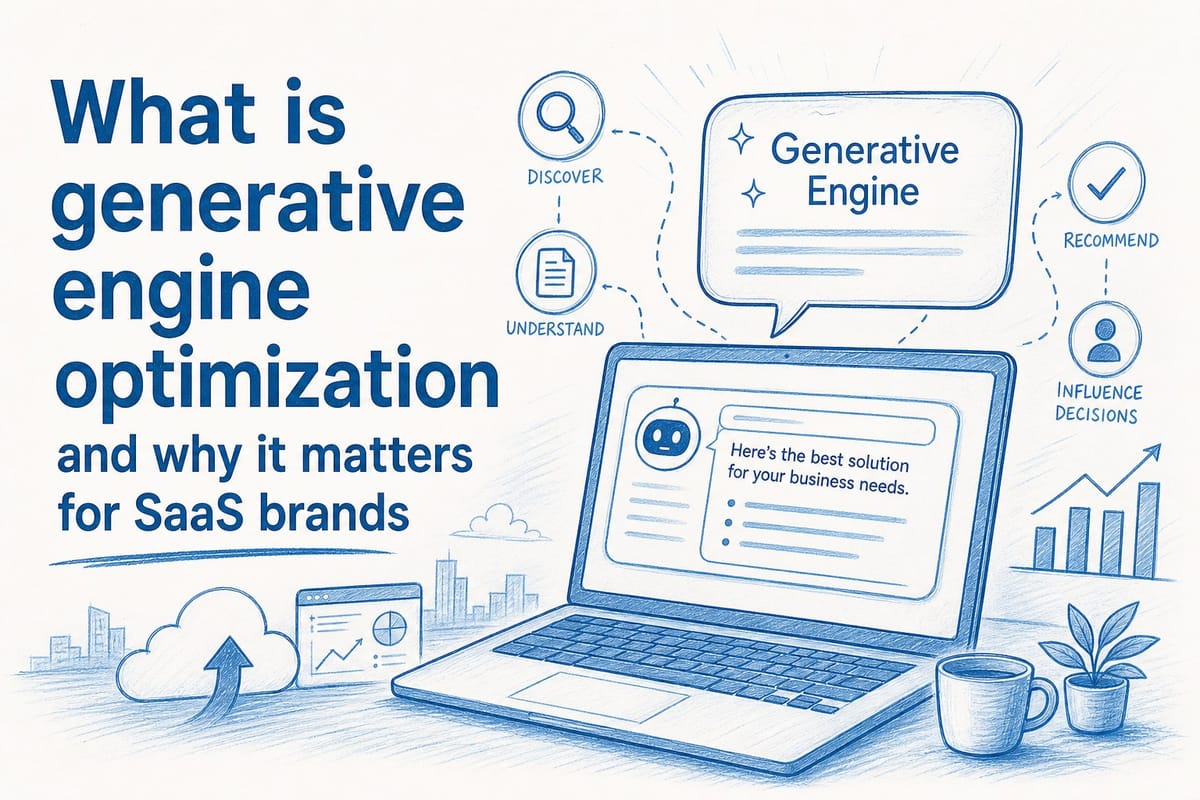
Table of contents
1. What generative engine optimization actually means
2. Why SaaS brands face a specific GEO challenge
3. How to build a practical GEO strategy for your SaaS brand
I want to start with a question I hear from SaaS founders almost every week: why is a competitor showing up in ChatGPT answers when a buyer asks for tool recommendations, and my product is nowhere to be found? The answer usually comes down to generative engine optimization, or GEO. It is a newer discipline, but it is already reshaping how B2B buyers discover software. If you sell a SaaS product and you are not thinking about this yet, you are likely losing ground to competitors who are. This article breaks down what GEO actually is, why it matters specifically for SaaS brands, and what you can do about it starting today.
What generative engine optimization actually means
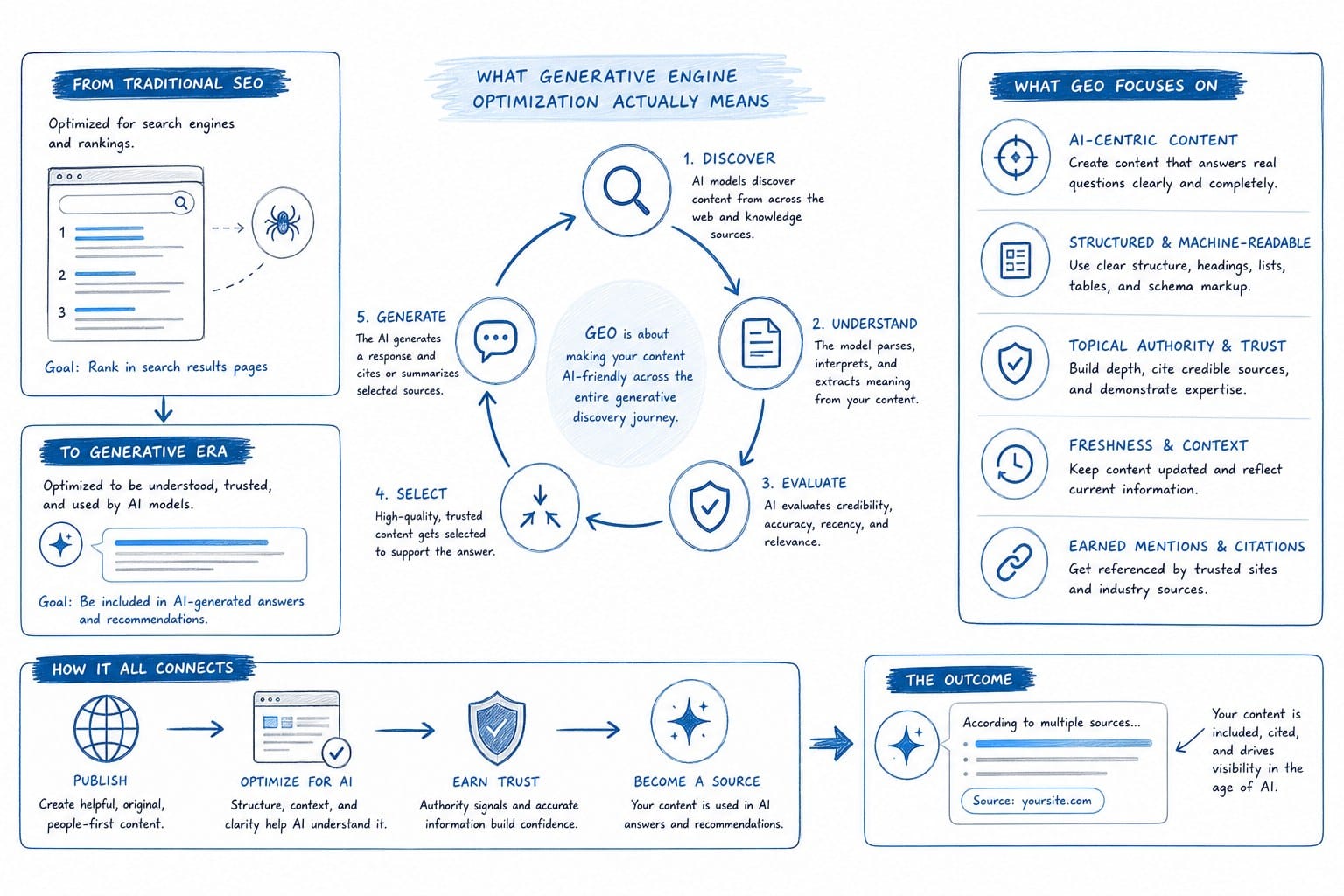
Generative engine optimization is the practice of shaping your brand's digital presence so that AI-powered tools like ChatGPT, Gemini, Perplexity, and Claude are more likely to cite, name, or recommend you when someone asks a relevant question.
Traditional SEO focuses on ranking a webpage in a list of blue links. GEO focuses on something different: getting your brand included in a conversational answer that an AI generates on the spot. Those are two very different outcomes, and they require two very different strategies.
When someone types 'what is the best project management tool for a five-person startup' into Perplexity, they do not get a list of links to scroll through. They get a paragraph or two that names specific products. The AI pulls from sources it has indexed and trusts. If your brand is not in those sources, you do not appear in the answer at all. There is no page two to fall back on.
This is why GEO has become a real priority for marketing teams. Buyers are increasingly using AI assistants as the first stop in their research process. A 2024 piece from Martech noted that GEO is to AI-driven search what SEO was to text-based search. That framing holds up. The underlying goal is the same: get found. The method is just different.
So what does GEO actually involve in practice? There are a few core components worth understanding.
First, there is the question of what sources AI engines trust. These systems pull from a mix of places: structured content on your website, third-party review sites like G2 and Capterra, news coverage, and community platforms like Reddit and Quora. The more your brand appears in credible, conversation-rich sources, the more material the AI has to work with when generating an answer about your category.
Second, there is clarity and structure in your content. AI models respond well to content that directly answers specific questions. A page that clearly explains what your tool does, who it is for, and how it compares to alternatives gives an AI something concrete to cite. Vague brand messaging does not translate well into AI answers.
Third, there is what some practitioners call earned media in community spaces. This is where Reddit threads, forum discussions, and peer-to-peer recommendations come in. AI engines regularly pull from Reddit because the conversations there are candid, specific, and often highly relevant to the questions buyers ask. If your brand is being mentioned in those threads, in a helpful and genuine way, that feeds directly into what an AI might cite.
One way to think about GEO versus SEO is that SEO is about being findable, and GEO is about being recommendable. A buyer who finds your website through a Google search still has to evaluate you. A buyer who hears your product named in an AI-generated answer has already received a soft endorsement from a system they trust. That is a meaningfully different starting point for a sales conversation.
For SaaS brands in particular, this matters because the buying process often starts with a question like 'what tools do teams use for X' or 'what is the best software for Y budget and team size.' Those questions are increasingly going to AI assistants first. If your product does not show up in the generated answer, you are effectively invisible at the most important moment in the discovery phase.
It is also worth noting that GEO is not a replacement for SEO. Organic search is still valuable, and a well-optimized site remains important. But GEO adds a layer on top of that. It asks: beyond ranking, are we being cited and recommended by the AI systems that buyers are now using to shortcut their research?
Why SaaS brands face a specific GEO challenge
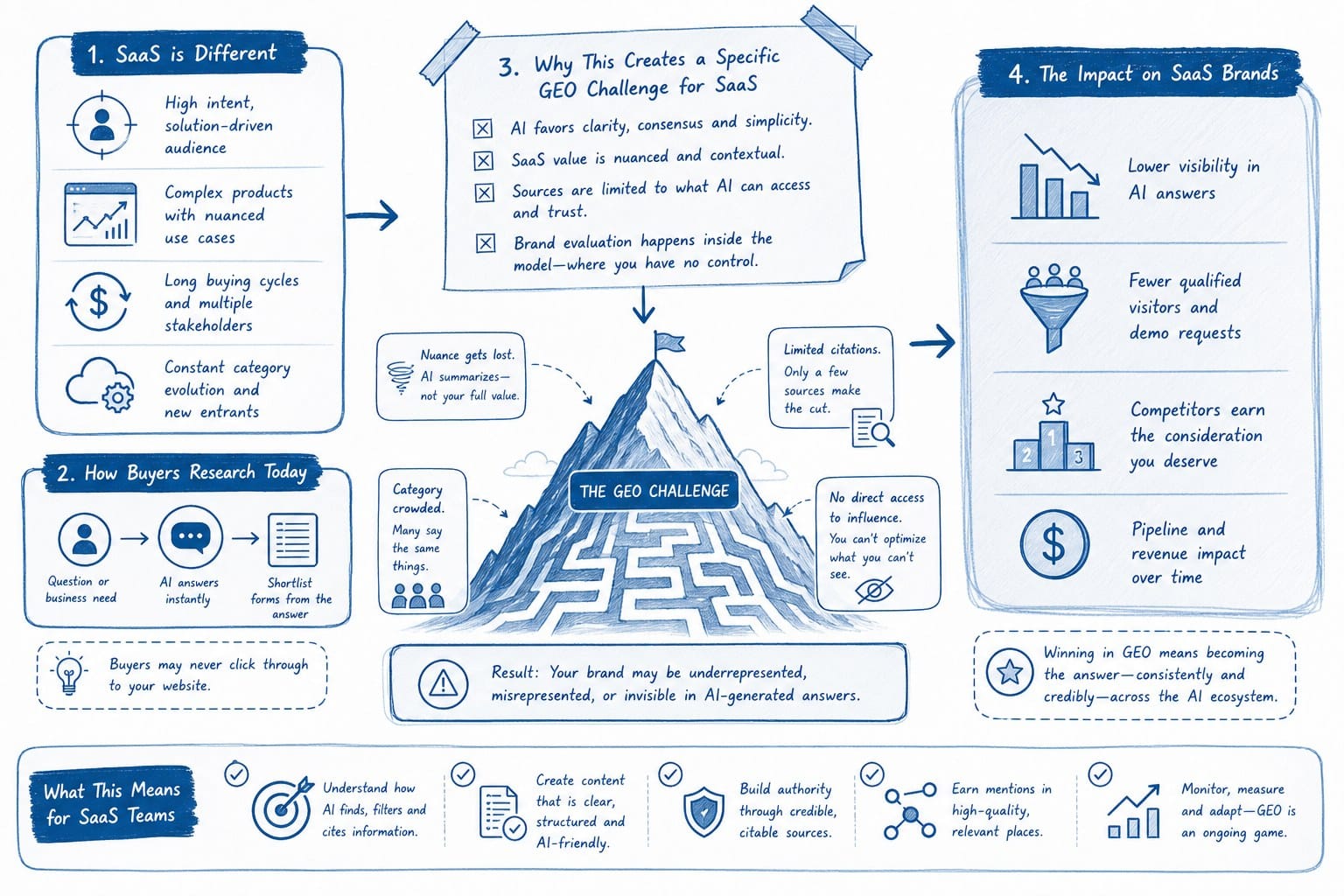
Most SaaS companies are fighting for attention in a noisy category. If you sell a CRM, a project management tool, a customer support platform, or almost any other type of business software, you are competing against dozens of established players who have been investing in content and SEO for years. That competitive pressure makes the AI visibility problem more acute.
Here is the core issue. AI engines do not just pull from your own website when generating answers. They pull from the broader web, and they weight sources that have high trust and high engagement. For most SaaS categories, that means established review platforms and active community discussions carry a lot of weight. A Reddit thread where real users debate the pros and cons of competing tools is exactly the kind of source that Perplexity or ChatGPT might cite when a buyer asks for recommendations.
This creates a real problem for smaller SaaS brands and newer entrants. If you are not being talked about in those spaces, or if the existing mentions of your brand are thin or negative, the AI has less reason to include you in its answer. You can have a beautifully designed website and a strong Google ranking and still be invisible in AI-generated answers if your brand is not present in the community conversations that AI engines are pulling from.
I have seen this pattern consistently with early-stage SaaS founders. They invest heavily in their website and their SEO, but they have very little Reddit presence or community footprint. When buyers ask an AI for tool recommendations in their category, the AI names competitors that have active Reddit communities and genuine user discussions behind them.
There are a few specific reasons this challenge is harder for SaaS teams than for, say, a large enterprise brand.
First, SaaS buyers are often highly specific in their questions. They do not ask 'what is CRM software.' They ask 'what CRM works well for a sales team of three people that integrates with Slack and costs less than fifty dollars a month per seat.' The AI needs detailed, specific information about your product to include you in an answer like that. Broad brand content does not cut it.
Second, small SaaS teams rarely have the bandwidth to monitor every relevant Reddit thread, forum discussion, or review platform and respond in a timely way. A single founder or a two-person marketing team cannot realistically track every mention of their category across the web and engage meaningfully in every relevant conversation. But that engagement is exactly what builds the community presence that AI engines pick up on.
Third, the competitive dynamic on Reddit specifically is tricky. Subreddits have their own cultures and norms. Promotional content is often flagged or downvoted. To build genuine presence there, you need to contribute real value to the conversation, answer questions honestly, and engage consistently over time. That takes effort and a real understanding of what the community cares about.
This is where tools designed specifically for GEO start to become useful. AppearsIn, for example, is built to help SaaS brands solve exactly this problem. It identifies Reddit threads that AI engines are already citing or are likely to cite in your category, drafts replies that are contextually relevant and helpful rather than promotional, and posts them from your own Reddit account after you review and approve them. It also monitors your brand and competitor mentions across the web and review platforms so you always know where you stand.
Other tools in the market approach different parts of this problem. Some focus on helping you structure your website content so that AI can parse it more easily. Others focus on monitoring AI mentions or tracking how often your brand appears in AI-generated answers. The broader GEO tooling space is still maturing, which is actually an opportunity for SaaS brands that move early.
The key insight for SaaS teams is that GEO is not just a content strategy. It is a presence strategy. It asks where your brand exists in the conversations that AI engines are learning from, and whether those conversations present your brand in a way that would make an AI comfortable recommending you to a buyer.
For B2B software specifically, the stakes are high because AI-generated shortlists are becoming a real part of the buying process. When a procurement manager asks ChatGPT for a list of vendor options in a category, that list often shapes the entire evaluation. Being on that list is meaningful. Being off it is costly.
Competitors who are already investing in GEO are not just showing up more in AI answers. They are shaping how buyers frame the category itself. If a competitor's name appears consistently alongside certain benefits or use cases in AI answers, buyers start to associate that positioning with the category standard. That is a significant advantage that compounds over time.
How to build a practical GEO strategy for your SaaS brand
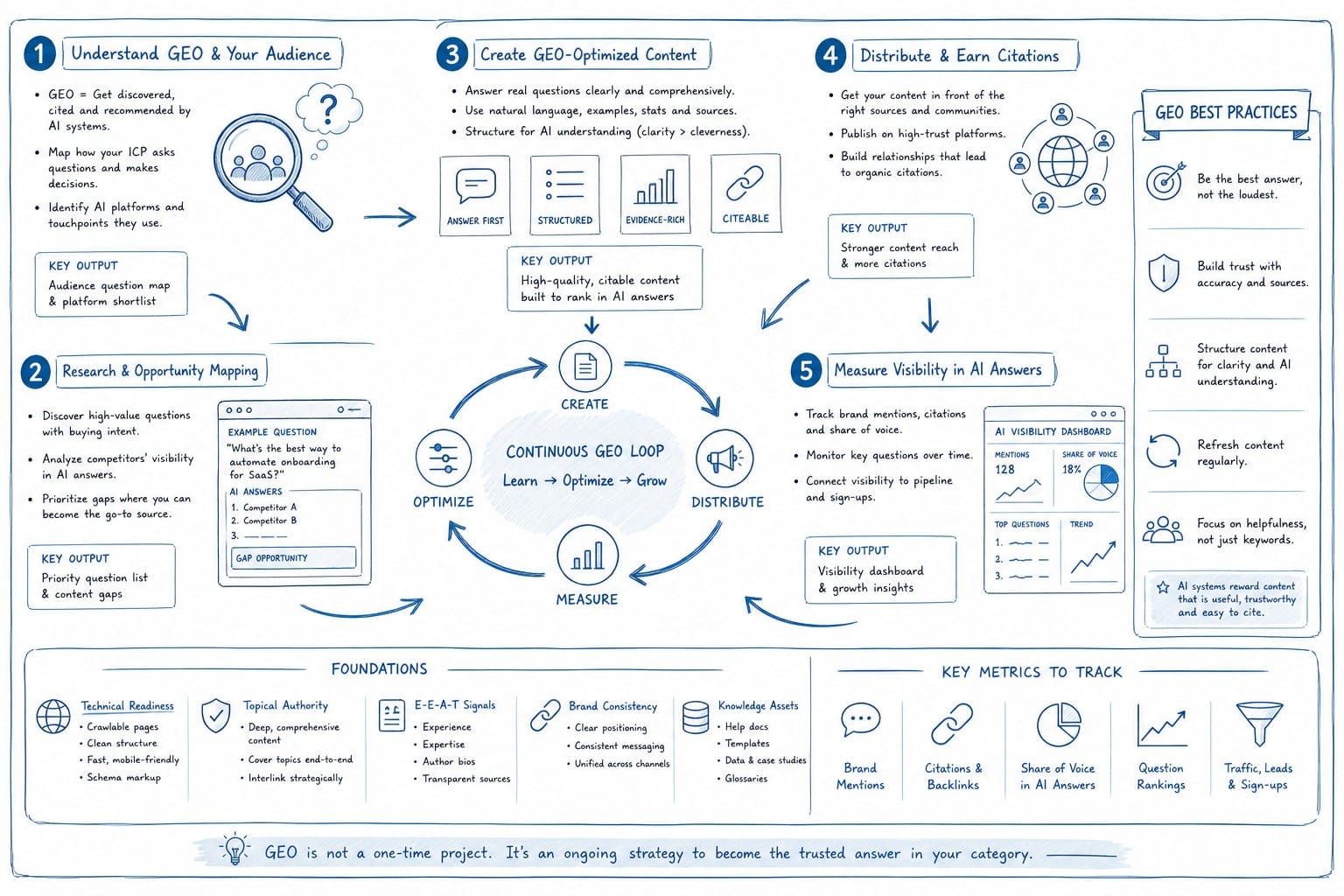
Building a generative engine optimization strategy does not require a large team or a massive budget. It does require being deliberate about where your brand shows up and what those appearances say about you. Here is how I think about it for SaaS brands specifically.
Start with your content foundation. AI engines need clear, direct, and specific information about your product to include you in relevant answers. That means your website should answer the questions buyers actually ask. Not just 'what does your product do' but 'who is it for,' 'how does it compare to alternatives,' 'what problems does it solve,' and 'what does it cost and what do you get at each tier.' Those are the questions buyers bring to AI assistants, and the AI pulls from sources that answer them clearly.
Write content that mirrors the language real buyers use. If your target buyer asks 'what is the easiest way to manage client projects without hiring a project manager,' that phrase and the concepts behind it should appear somewhere in your content. Not because you are stuffing keywords, but because you are genuinely answering the question your buyer has.
FAQ pages, comparison pages, and use-case specific landing pages all perform well for GEO because they are structured around specific questions and answers. Those formats make it easy for an AI to extract a clear, citable response.
Next, get serious about review platforms. G2, Capterra, Product Hunt, and similar sites carry real weight with AI engines. These platforms are trusted third-party sources, and they often appear directly in AI-generated answers. If your product has ten reviews and a competitor has three hundred, that gap is visible to both buyers and AI systems.
Ask your customers to leave honest reviews. Make it easy for them by sending a direct link. Do not incentivize reviews in ways that violate platform policies, but do make reviewing a natural part of your customer journey. A steady stream of recent, specific reviews that mention real use cases gives AI engines credible content to pull from.
Then, invest in your Reddit presence. This is the part most SaaS brands are skipping, and it is the highest-leverage opportunity right now. Reddit threads are consistently cited by AI engines because they contain genuine user perspectives, real comparisons, and specific use cases. When a buyer asks Perplexity which tool is better for their situation, Perplexity often pulls from Reddit discussions where real users debated the same question.
Building a Reddit presence takes time and consistency. You need to find the subreddits where your buyers spend time, understand what kinds of questions they ask, and contribute genuinely helpful answers. Directly promoting your product in most subreddits will get you banned or downvoted. But answering a question thoughtfully and mentioning your product as one option among several, in a context where it is genuinely relevant, is a legitimate and effective approach.
The challenge is doing this at scale. Monitoring every relevant thread across dozens of subreddits is time-consuming. This is exactly the use case that AppearsIn is built for. It surfaces the Reddit threads in your category that AI engines are already pulling from, drafts contextually appropriate replies, and lets you review before anything goes live. You stay in control of your voice and your messaging, but the heavy lifting of monitoring and drafting is handled for you.
For agencies managing multiple SaaS clients, this kind of tooling is especially valuable. You can track AI mention frequency for each client, monitor competitor mentions, and build a clear reporting story around GEO performance. That is something clients increasingly want to see.
Beyond Reddit, look at other community spaces where your buyers are active. Slack communities, LinkedIn groups, industry forums, and niche Discord servers all contribute to the web of conversations that AI engines learn from. Consistent, helpful participation in those spaces builds the kind of brand presence that shows up in AI answers over time.
Measurement is the part of GEO that is still evolving. Unlike SEO, where you can track keyword rankings with precision, GEO measurement requires a different approach. You can track how often AI engines name your brand in response to specific prompts. You can monitor whether you appear on AI-generated shortlists in your category. You can track sentiment in the mentions that do appear. Tools like AppearsIn help with this by giving you ongoing monitoring of brand mentions across the web and review platforms, so you can see where you stand and how that changes over time.
One practical exercise I recommend: open ChatGPT, Perplexity, or Gemini and type the question your ideal buyer would ask when looking for a solution like yours. See who appears in the answer. If it is not you, that is your starting point. Work backwards from that answer to understand what sources the AI is pulling from and how you can build presence in those sources.
Finally, think about consistency over time. GEO is not a campaign you run once. It is an ongoing investment in your brand's presence across the sources that AI engines trust. The brands that will win in AI-driven discovery are the ones that are consistently showing up in credible, specific, helpful conversations about their category.
For SaaS founders and small teams, the practical path forward is to pick two or three high-leverage actions: improve the question-and-answer clarity on your website, build your review base on one or two key platforms, and start engaging on the Reddit subreddits where your buyers are asking questions. Use tools where they save you time without sacrificing authenticity. Monitor your visibility and adjust based on what you see.
Generative engine optimization is not a trend that is going away. As more buyers start their research with an AI assistant rather than a search engine, the brands that have invested in GEO will have a meaningful, compounding advantage over those that have not. The time to start is now, while the space is still early and the competitive bar is not yet as high as it will become.
If you want to understand how AppearsIn approaches this problem for SaaS brands, including how it finds the Reddit threads AI engines are already citing in your category, it is worth seeing how the platform works in practice. For teams that want to track AI visibility across multiple clients or competitors, the AppearsIn pricing page shows what is available at different levels. There is also a browser extension that helps you monitor mentions and brand presence as you browse.
Ready to take the next step?
Generative engine optimization is the clearest opportunity most SaaS brands are not yet acting on. If you want to start showing up in AI-generated answers when buyers ask for tools in your category, the place to start is understanding where you currently stand and what conversations are shaping those answers. AppearsIn is built to help SaaS brands do exactly that, without needing a full marketing team to make it happen.